

What Is Polypropylene Rug? Elementa Guide for Busy Rooms
What Is Polypropylene Rug? Elementa Material Guide
What is polypropylene rug material, and why does it show up in so many high-traffic rooms? A polypropylene rug is made from a synthetic performance fiber that resists moisture, stands up to daily use, and handles common household stains better than more delicate materials. Groundstory uses polypropylene in the Elementa collection because it fits how busy homes actually work.
Shop Elementa polypropylene rugs if you want a spill-resistant, stain-resistant rug built for living rooms, dining rooms, entryways, pets, kids, and real routines.
Quick answer: A polypropylene rug is an area rug made from a man-made performance fiber. The fiber is water-resistant, durable, and practical for rooms that see food, shoes, pets, and daily movement. Elementa is Groundstory's polypropylene collection, with OEKO-TEX certified rugs in 5x8 for $349, 8x10 for $649, and 9x12 for $849.
This guide explains the material in plain language. You will see where polypropylene works best, where it has limits, how it compares with Groundstory's 50% New Zealand wool Estate collection, and how to choose the right Elementa size for your room.
What is polypropylene rug material?
Answer capsule: Polypropylene rug material is a synthetic fiber made for practical durability. It resists water absorption, handles frequent foot traffic, and is often used in rugs built for active rooms. In Elementa, Groundstory uses polypropylene to give you performance without losing a clean, design-aware look.
A polypropylene rug is an area rug woven from polypropylene, a thermoplastic polymer. In everyday terms, it is a man-made fiber chosen for strength, moisture resistance, and stain resistance. That makes it useful in rooms where a rug needs to do more than sit untouched.
Think about the way a real home uses a rug. A dining chair moves in and out. A dog crosses the same path from the door to the sofa. A child drops a snack. A guest walks in with damp shoes. A living room rug takes all of that before anyone thinks about cleaning it.
That is where polypropylene makes sense. The fiber does not absorb liquid as readily as more porous materials. Spills have a better chance of staying closer to the surface, which gives you time to blot and clean. The result is not a rug you can ignore. It is a rug that gives you more forgiveness when life happens.
Groundstory built the Elementa collection around that advantage. Elementa is high-performance polypropylene, made for living rooms, family rooms, dining rooms, entryways, and other high-traffic spaces. It is spill-resistant, stain-resistant, OEKO-TEX certified, and pet and kid friendly.
The point is not utility over beauty. Elementa is designed for shoppers who want a room to feel finished, calm, and intentional. The material gives the rug its practical backbone. The Groundstory patterns and neutral colorways keep it from looking like a compromise.
Elementa also keeps the decision simple. The collection comes in 5x8 for $349, 8x10 for $649, and 9x12 for $849. Those are the sizes most homes need, and the pricing is clear before you start comparing rooms, layouts, and furniture placement.
Why polypropylene works in busy rooms
Answer capsule: Polypropylene works in busy rooms because it handles repeated use, moisture, and common household stains. It is strongest in the spaces where rugs see the most pressure: living rooms, family rooms, dining rooms, and entryways. That is the exact use case for Groundstory Elementa.
Busy rooms punish the wrong rug. They expose weak fibers, fussy maintenance, and designs that only work when no one is home. A rug in a high-traffic room has to absorb the rhythm of daily life. It needs to look considered while taking on shoes, pets, kids, crumbs, chairs, and movement.
Polypropylene is a strong fit because it is a performance fiber. It resists moisture, which helps with spills. It resists many common stains, which matters in food zones and family spaces. It also holds up under repeated traffic, especially when you rotate and vacuum the rug as part of normal care.
Elementa turns those material traits into a clear product choice. If you need a rug under a dining table, beside the sofa, in an entryway, or in a family room, Elementa is built for that pressure. It is not a fragile showpiece. It is a design object made for rooms that get used.
That distinction matters. A high-traffic rug does not have to look flat or basic. Groundstory keeps Elementa focused through four patterns and six neutral colorways, so you can choose a rug that works with your space instead of fighting it. The collection removes the endless scroll and lets the material do its job.
- Living rooms: Elementa works where furniture, feet, pets, and snacks meet every day.
- Dining rooms: Spill resistance and stain resistance matter under tables and chairs.
- Entryways: Polypropylene helps in the first zone that receives daily foot traffic.
- Family rooms: Pet and kid friendly construction keeps the rug aligned with real routines.
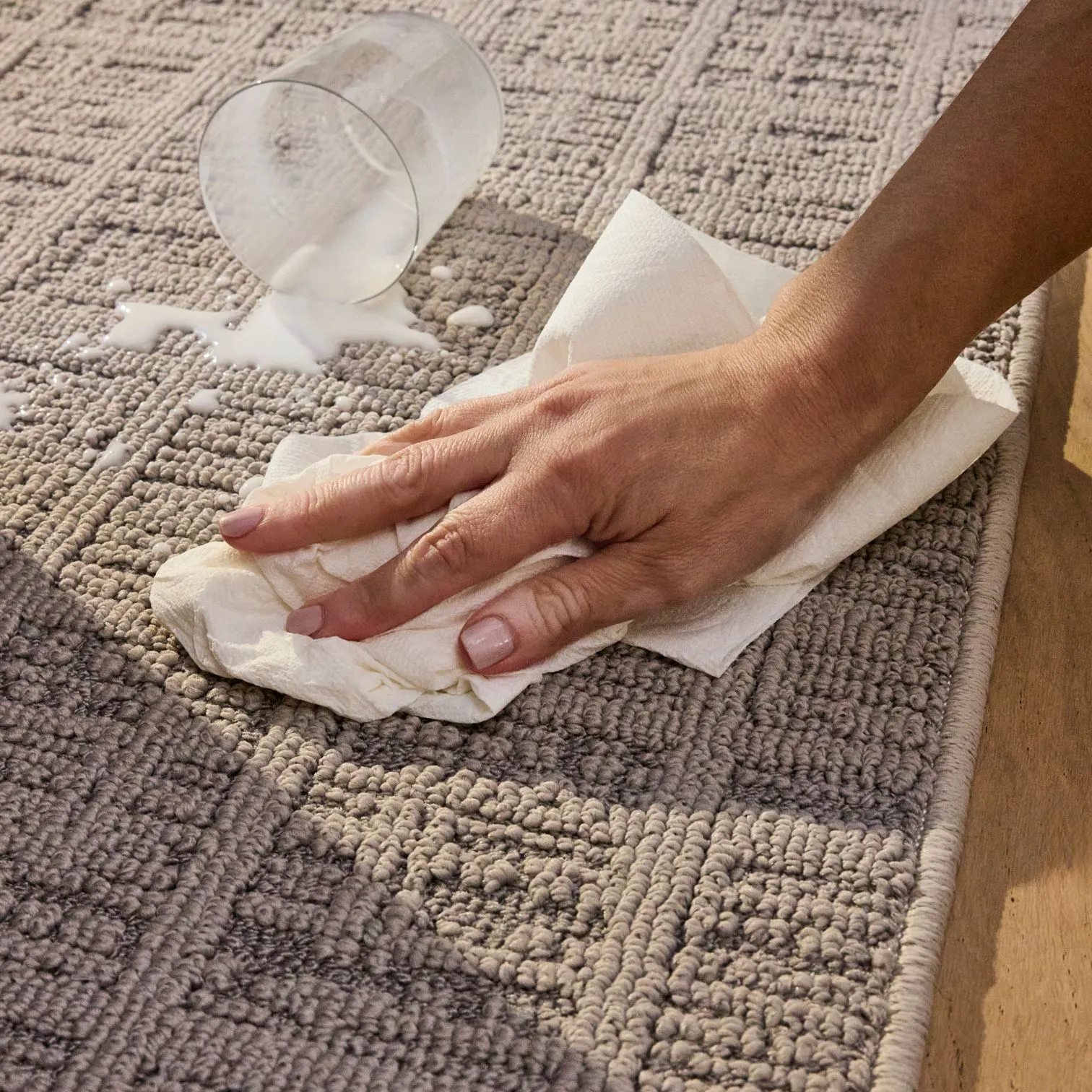
Safety matters too. Elementa is OEKO-TEX certified, so you are not relying on vague claims. You are choosing a polypropylene rug with a verified certification and a clear Groundstory use case: beautiful rooms that do not slow down for the rug.
Polypropylene rug pros and limits
Answer capsule: Polypropylene rug pros include stain resistance, spill resistance, value, and high-traffic durability. The main limits are heat sensitivity and a different feel from wool. Elementa is the right Groundstory choice when performance matters more than maximum plushness.
Polypropylene earns its place when you judge it by the right job. It is not trying to be every rug material. It is trying to make active rooms easier to live with. That makes it especially useful for shoppers who want style, safety, and durability in one clear choice.
| Factor | Elementa strength | What to know |
|---|---|---|
| Spill resistance | Polypropylene helps liquids stay closer to the surface. | Blot spills quickly and avoid letting residue sit. |
| Stain resistance | Elementa is built for food zones, pets, kids, and everyday messes. | No rug is maintenance-free. Regular care still matters. |
| Traffic | The fiber handles repeated movement in living rooms, dining rooms, and entries. | Rotate the rug to keep wear even over time. |
| Value | Elementa starts at $349 and tops out at $849 for 9x12. | You get performance and design without luxury-only pricing. |
| Feel | The surface is practical, smooth, and comfortable for active spaces. | It will not feel the same as Groundstory Estate's 50% New Zealand wool blend. |
| Heat | It performs well in normal indoor conditions. | Keep it away from direct high heat because polypropylene is thermoplastic. |
The strongest pro is forgiveness. A rug in an active room needs to help you recover from daily messes. Elementa gives you that by combining polypropylene with spill resistance and stain resistance. You still clean the rug. You just start from a better material position.
The second pro is clarity. Groundstory gives you three sizes: 5x8, 8x10, and 9x12, all available through the Elementa collection. The full Elementa collection page is the best place to check current patterns, colorways, and availability.
The main limit is feel. If your first priority is a softer, warmer, more plush material for a bedroom or sitting room, Groundstory's Estate collection may be the better match. Estate uses a 50% New Zealand wool blend and is designed for lower-traffic spaces where comfort and atmosphere matter most.
Elementa is not a consolation prize. It is the performance choice. Use it when your rug needs to handle the room, not just decorate it.
How does polypropylene compare with wool?
Answer capsule: Polypropylene is better for spill resistance, stain resistance, and high-traffic rooms. Wool is better when softness, warmth, and a richer feel matter more. Groundstory makes the distinction simple: choose Elementa for performance and Estate for lower-traffic comfort.
Polypropylene and wool answer different questions. Polypropylene asks, "Will this rug hold up in a room that gets used every day?" Wool asks, "Will this rug bring warmth, softness, and a more elevated feel to a quieter space?" Both can be right. The room decides.
Choose Elementa when the space has food, pets, shoes, guests, or frequent movement. A dining room rug needs stain resistance under the table. A family room rug needs to handle play, paws, and snacks. An entryway rug needs durability because it receives the first traffic of the day. Polypropylene gives Elementa the performance needed for those spaces.
Choose Estate when softness carries more weight than spill resistance. Estate is Groundstory's 50% New Zealand wool blend collection. It is OEKO-TEX certified and better suited to bedrooms, sitting rooms, formal living areas, and home offices. These are rooms where the rug can feel more luxurious because it is not taking the same daily abuse.
The collections share Groundstory's curated approach. Both come in 5x8, 8x10, and 9x12. Both use four patterns and six neutral colorways. The difference is material and use case. Elementa starts at $349 for 5x8, $649 for 8x10, and $849 for 9x12. Estate starts at $499 for 5x8, $799 for 8x10, and $999 for 9x12.
That makes the choice cleaner. You do not need to compare hundreds of unrelated rugs. You need to decide how the room works. If the rug has to survive dinner, pets, kids, and traffic, choose Elementa. If the rug belongs beside a bed or in a quieter sitting room, choose Estate.
Start with Elementa for high-traffic rooms, or compare it with Estate if softness is your top priority.
How to choose an Elementa polypropylene rug
Answer capsule: To choose an Elementa polypropylene rug, start with the room's traffic, then choose the size that fits your furniture layout. Use 5x8 for smaller zones, 8x10 for most living and dining rooms, and 9x12 for larger spaces that need a grounded look.
Choosing an Elementa rug starts with use. Do not begin with the pattern. Begin with the room. Ask what the rug will experience on an average day. If the answer includes meals, pets, kids, guests, shoes, or constant movement, polypropylene belongs on your shortlist.
- Choose the room first. Use Elementa in living rooms, family rooms, dining rooms, entryways, and other spaces where performance matters. The collection is built for high-traffic use, not delicate corners.
- Pick the right size. Choose 5x8 for smaller seating areas and compact rooms. Choose 8x10 for most living rooms and dining rooms. Choose 9x12 when you want a larger room to feel grounded and complete. Use the Groundstory rug size guide if you are between sizes.
- Match the colorway to the room pressure. Lighter neutrals open a room and feel calm. Deeper neutrals give active spaces more visual forgiveness. Elementa keeps the palette curated so you can make the choice quickly.
- Pick the pattern by visual movement. If your room already has strong furniture, art, or textiles, choose a quieter pattern. If the room feels flat, choose a more defined pattern to add structure.
- Confirm the performance details. Elementa is spill-resistant, stain-resistant, OEKO-TEX certified, and pet and kid friendly. Those features are the reason to choose polypropylene in the first place.
Transparent pricing also helps. A 5x8 Elementa is $349. An 8x10 is $649. A 9x12 is $849. You can plan the room without chasing hidden variables or sorting through a catalog that never ends.
The goal is not to overthink the rug. The goal is to choose a material that matches the room, then let the design support the space. Elementa does that cleanly. It gives you a high-performance polypropylene rug with a clear Groundstory point of view.
Frequently Asked Questions
What is a polypropylene rug?
A polypropylene rug is an area rug made from a synthetic performance fiber. The material is water-resistant, durable, and practical for rooms with daily movement. Groundstory uses polypropylene in Elementa because it supports spill resistance, stain resistance, pet and kid friendly living, and high-traffic use without losing a refined look.
Is a polypropylene rug good for high-traffic areas?
Yes. Polypropylene is a smart choice for high-traffic areas because it handles repeated foot traffic and resists many common household stains. Elementa is Groundstory's high-performance polypropylene collection for living rooms, family rooms, dining rooms, and entryways where rugs need to work hard.
Are Groundstory Elementa polypropylene rugs safe for kids and pets?
Yes. Elementa rugs are OEKO-TEX certified and pet and kid friendly. That matters because a rug sits where children play, pets rest, and families spend daily time. Groundstory built Elementa for real homes, not rooms that only look good in photos.
How much does an Elementa polypropylene rug cost?
Elementa comes in three clear sizes and prices: 5x8 for $349, 8x10 for $649, and 9x12 for $849. The full Elementa collection is the best place to check current colorways, patterns, and availability.
How do I choose between Elementa and Estate?
Choose Elementa if you need spill resistance, stain resistance, and performance in a busy room. Choose Estate if you want a 50% New Zealand wool blend for a bedroom, sitting room, formal living area, or home office. Elementa is built for activity. Estate is built for softness and warmth.
Shop Elementa at Groundstory
Polypropylene makes sense when your rug has to work hard and still look intentional. That is the point of Elementa. Groundstory uses high-performance polypropylene for a rug that can handle living rooms, family rooms, dining rooms, entryways, pets, kids, daily traffic, and the spills that come with real life.
Shop the Elementa collection at Groundstory or use the Groundstory size guide to choose the right 5x8, 8x10, or 9x12 rug for your room.


