

Stain Resistant Polypropylene Rug: Why Fiber Beats Surface Coatings
Most stain resistant rugs lose their power within a year. The chemical spray that blocks spills simply rubs off under daily foot traffic, leaving bare fibers that soak up every splash of wine, coffee, or muddy paw print. That is why a growing number of homeowners are switching to rugs where the stain defense is built into the fiber itself.
A stain resistant polypropylene rug beats surface-coated rugs because the protection is built into the fiber. Conventional carpets rely on temporary chemical sprays that wear off under foot traffic. Polypropylene is inherently hydrophobic and repels liquids without any added chemicals. Groundstory designs the Elementa collection with spill-resistant, OEKO-TEX certified polypropylene that never needs reapplication.
Shop the Elementa collection and see the difference that fiber-intrinsic stain resistance makes in your home.
Many homeowners do not realize how quickly coated rugs can lose their protection. Understanding how rug fibers work helps you avoid buying a product that will fail in its first year.
Why Do Surface Coatings on Stain Resistant Rugs Wear Off?
Most stain resistant rugs on the market use a thin chemical spray applied to the surface of the fibers after the rug is woven. This coating creates a temporary barrier that blocks liquid from soaking in. But the barrier has a critical weakness: it wears off.
The short answer: Surface coatings wear off because they sit on top of the fiber rather than being part of it. Foot traffic, vacuuming, cleaning products, and UV exposure all degrade the treatment. Within 12 to 24 months, most coated rugs lose their stain resistance entirely.
How foot traffic and cleaning degrade the coating
Every step you take on a coated rug grinds its chemical guard down. Pets running across the room, kids playing with toys, and even routine vacuuming all scrape the treatment away. A study on surface-applied fiber treatments confirms that these coatings lose effectiveness under friction and regular cleaning. Once the coating is gone, spills soak deep into the backing, creating lasting spots and odors that are difficult to remove.
Why reapplication is not a real solution
Some manufacturers suggest reapplying spray-on treatments every few months. But this creates a recurring cost and exposes your family to additional chemicals each time you treat the rug. The better approach is to choose a material that does not need coating in the first place. A stain resistant polypropylene construction offers permanent protection that you never have to renew.
Why Polypropylene Fiber Is Naturally Stain Resistant
Polypropylene is a synthetic polymer with a unique property: it is hydrophobic. The fiber actively repels water rather than absorbing it. This is not a coating or treatment. It is the fundamental chemistry of the material itself.
The short answer: Polypropylene is naturally stain resistant because its molecular structure repels water. Spills sit on the surface and can be wiped away before a stain forms. The protection cannot wear off because it is built into every thread.
The science behind hydrophobic fibers
When you spill a drink on a stain resistant polypropylene rug, the liquid beads up on the surface. It does not sink into the fiber. A peer-reviewed study on polypropylene water resistance shows that the polymer absorbs almost no moisture. This low absorption rate is why spills stay on top, where you can blot them away before they ever become a stain.
Solution dyeing locks color and resistance together
Groundstory uses solution-dyed polypropylene for the Elementa collection. In this process, color pigments are mixed into the liquid polymer before the fiber is extruded. The pigment runs through the entire thread. This is fundamentally different from applying a coating after weaving.
Think of it this way: a solution-dyed fiber is like a carrot, colored all the way through. A coated fiber is like a radish with color only on the skin. You cannot wear away the stain resistance from a solution-dyed rug because there is no separate coating to rub off. The material that resists stains is the fiber itself. This construction also resists fading from sunlight, keeping colors vibrant for years.
Real-Life Tests: How Elementa Handles Wine, Coffee, and Mud
The real test of any rug is how it performs when life happens. Red wine at a dinner party, coffee during the morning rush, muddy paw prints after a walk. Here is how a stain resistant polypropylene rug handles each scenario.
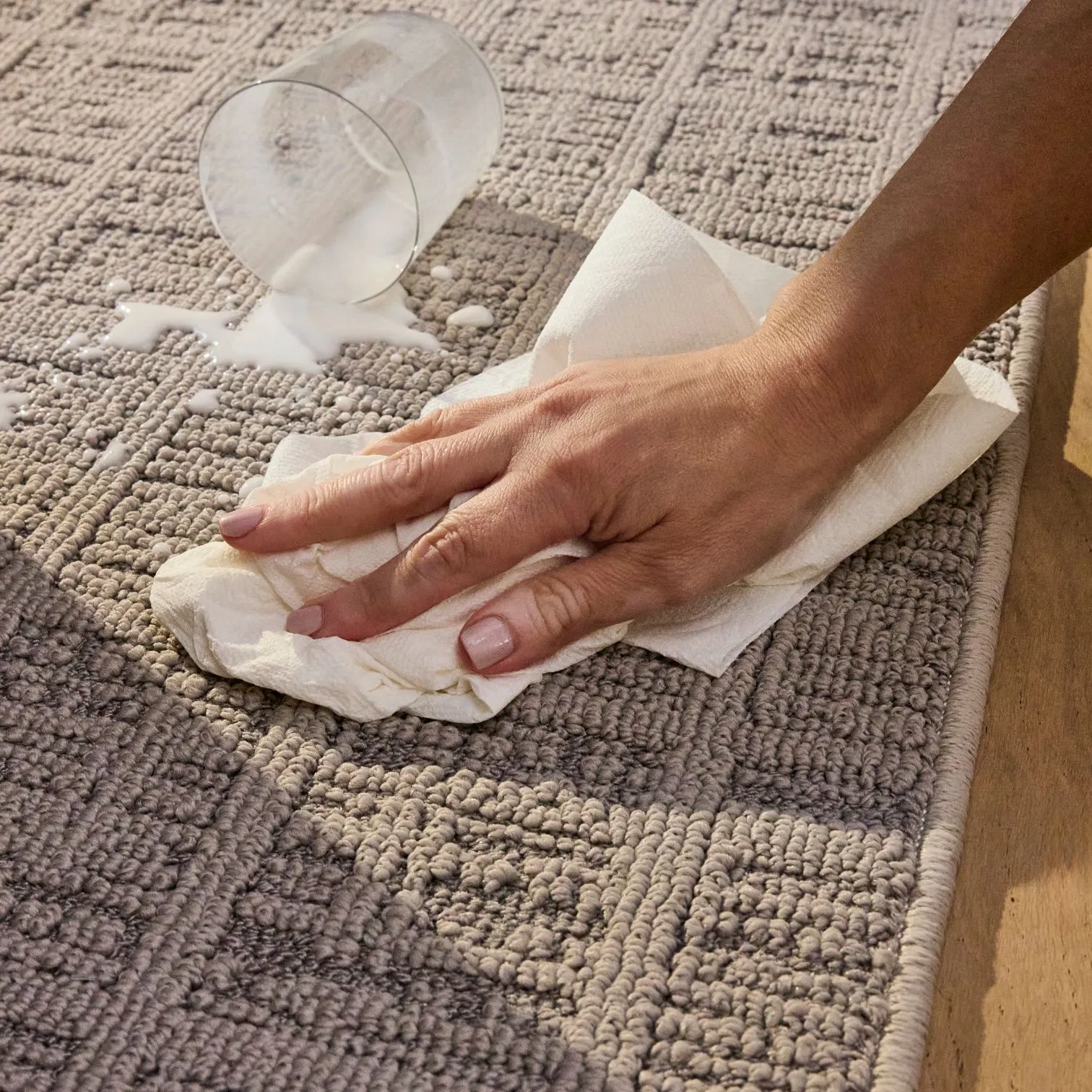
The short answer: Elementa rugs repel liquid spills on contact. Red wine, coffee, and mud all sit on the surface. A simple blot with a paper towel and mild soap is enough to clean the area completely.
Step-by-step spill response
- Blot the liquid immediately. Press a clean white paper towel or dry cloth onto the spill to lift the liquid before it spreads.
- Do not rub. Rubbing pushes liquid deeper into the backing. Always blot with firm downward pressure instead.
- Apply mild soap. Mix warm water with a few drops of mild dish soap and dab the area with a sponge.
- Rinse with clean water. Use a damp cloth to remove any soap residue from the fibers.
- Let the area air dry. The synthetic fibers dry quickly once the liquid is gone.
Handling dry mud and dirt
Muddy paw prints need a slightly different approach. Let the mud dry completely first. Wet mud smears across the surface, but dry mud turns to dust. Once the spot is dry, vacuum it away with a standard upright vacuum. The Elementa collection is spill resistant, stain resistant, and OEKO-TEX certified, so it stands up to tough cleanups without damage.
How Do Coated Rugs Compare to Solution-Dyed Polypropylene After 2 Years?
The biggest difference between coated rugs and solution-dyed polypropylene shows up after extended use. A rug that looks great on day one can look very different after two years of daily life.
The short answer: After two years, coated rugs have lost most of their stain protection and show visible wear. Solution-dyed polypropylene rugs retain their original stain defense, color, and appearance with minimal cleaning effort.
| Factor | Coated Rug | Polypropylene (Elementa) |
|---|---|---|
| Stain protection after 1 year | High but starts to wear off | Full defense remains |
| Stain protection after 2 years | Poor, coating mostly gone | Full defense remains |
| Cleaning frequency | High, stains soak into yarn | Low, spills stay on surface |
| Color fade resistance | Low, colors fade in sunlight | High, solution-dyed colors hold |
| Cost over 3 years | High from retreatments or replacement | Low, single purchase lasts |
Total cost and value
Rugs with surface coatings often seem affordable upfront. But when the coating wears off, you face professional cleaning costs or a full replacement. The actual expense grows each year as you chase a solution that keeps failing. Coated rugs simply do not hold up over time.
Groundstory's Elementa collection offers a smarter investment. A 5x8 rug costs $349, an 8x10 rug costs $649, and a 9x12 rug costs $849. These are one-time prices for permanent protection. Research shows that polypropylene fibers have excellent resistance to abrasion, meaning the rug stays bright and clean for years without extra chemical treatments. Choosing fiber-intrinsic defense is the most cost-effective way to keep your home looking great.
Elementa by Groundstory: Built for Real Life
Active homes need rugs that can handle real wear. You should not have to choose between style and durability. Groundstory built the Elementa collection to deliver both.
The short answer: Elementa combines fiber-intrinsic stain resistance with OEKO-TEX safety certification, four curated patterns, six neutral colorways, and three sizes. It is designed for high-traffic living rooms, family rooms, and dining spaces where spills happen daily.
Inherent stain defense
Elementa rugs use solution-dyed polypropylene fiber. The stain defense is built into the material, not applied as a coating. Spills like red wine, hot coffee, and muddy paws sit on top of the yarn. You wipe them away with a damp cloth and mild soap. No special cleaners needed. Foot traffic and daily cleaning will not degrade the fiber's performance because there is no coating to wear off.
Design, sizes, and pricing
Elementa offers four curated patterns and six neutral colorways that fit any home style. Choose from three sizes: 5x8 ($349), 8x10 ($649), and 9x12 ($849). Each rug is OEKO-TEX certified, meaning it is tested and free from harmful substances.
All Groundstory rugs share the same four patterns and six color options across both collections. So you can mix Elementa and Estate pieces throughout your home with a consistent look. Browse the full selection at groundstory.com.
How to Care for Your Stain Resistant Polypropylene Rug
Caring for a polypropylene rug is simpler than caring for most other floor coverings. The fiber does not absorb spills, so maintenance is mostly about removing surface dirt and keeping the fibers looking fresh.
The short answer: Vacuum twice a week, blot spills immediately with a dry cloth, spot clean with mild soap and water, and rotate the rug every six months. No special cleaners, steam treatments, or professional services are needed.
- Vacuum twice a week. Routine vacuuming lifts loose dirt and pet hair before they settle into the backing. This prevents grit from grinding the fibers and causing premature wear.
- Blot spills immediately. Use a dry white paper towel or clean cloth to press and lift the liquid. Never scrub, as rubbing can spread the stain.
- Spot clean with mild soap. Mix warm water with a few drops of mild dish soap. Apply with a sponge, rinse, and blot dry.
- Deep clean when needed. Use a standard carpet cleaner with a polypropylene-safe solution. Let the rug dry fully before walking on it.
- Rotate the rug every six months. Turning it 180 degrees ensures even wear and balanced sun exposure.
Read the full care instructions for polypropylene rugs for more detail on specific stain types and cleaning products.
Frequently Asked Questions
Is a stain resistant polypropylene rug safe for pets and kids?
Yes. Groundstory's Elementa collection is OEKO-TEX certified, meaning it is tested and free from harmful chemicals. The synthetic fibers also resist dust mites and allergens, making your indoor environment cleaner. Research on indoor dust and synthetic fibers supports this benefit.
Why do surface coatings on stain resistant rugs wear off?
Treated rugs rely on liquid chemical sprays applied after weaving. These treatments degrade under foot traffic, vacuuming, and UV exposure. Studies on surface coating durability confirm that the barrier weakens within months. A stain resistant polypropylene rug has protection built into the fiber itself, which never washes away.
Can you use common household detergents to clean polypropylene rugs?
Yes. Polypropylene has high chemical stability. Research on polypropylene fiber properties shows the material resists damage from common soaps and cleaners. You can use mild dish soap to treat stubborn spots without affecting the fiber structure.
What makes a stain resistant polypropylene rug better for high traffic homes?
Polypropylene is highly hydrophobic, meaning it repels water. According to textile research on synthetic fiber performance, this low moisture absorption prevents spills from soaking into the rug. In high traffic areas where spills are frequent, this makes cleanup fast and prevents permanent staining.
Ready to Choose a Rug That Keeps Its Promise?
Surface-coated rugs look good in the showroom but lose their stain resistance within a year. Groundstory Elementa rugs are different. The stain protection is built into every fiber and lasts the lifetime of the rug. No reapplications. No hidden costs. Just permanent performance backed by OEKO-TEX safety certification.
Shop the Elementa collection at Groundstory and bring home a stain resistant polypropylene rug that actually stays resistant.


